Research & Faculty
Overview
The physics disciplines of Fudan University, SJTU, and Tongji University form a powerhouse of fundamental research in Shanghai, spanning condensed matter physics, particle and nuclear physics, astronomy, optics, acoustics, quantum science and so on.
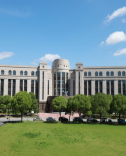
The Department of Physics at Fudan University, established in 1952 through the merger of eight university departments, is an institution of great historical depth and academic distinction. It has made pioneering contributions to condensed matter physics, optical physics, theoretical physics, and other frontiers, consistently yielding high-level original research, and remains a vital base for fundamental physics research and talent cultivation in China. SJTU's School of Physics and Astronomy, tracing its origins to 1928, became one of China's most comprehensive physics programs after its rapid expansion since 2007. Tongji's School of Physics Science and Engineering, rooted in the 1940s, uniquely integrates physics with engineering for national strategic needs. Complementing these, the Tsung-Dao Lee Institute (TDLI) at SJTU, founded in 2016, pursues cosmology, dark matter, and topological quantum computation; Tongji's Center for Frontier Interdisciplinary Research in Fundamental Sciences (FIRFS), launched in 2026, orchestrates cross-disciplinary innovation across eight disciplines. The three universities, by combining their strengths, represent the pinnacle of physics disciplines in Shanghai.
-

Department of Physics at Fudan University
QS# 47 in the World- 6 Rsearch Fields
- 5th National Discipline Evaluation:A+
- ESI Ranking Top 1‰
-

School of Physics and Astronomy at Shanghai Jiao Tong University
Tsung-Dao Lee InstituteQS# 36 in the World- 8 Comprehensive Disciplines
- 5th National Discipline Evaluation:A
- ESI Ranking Top 1‰

-

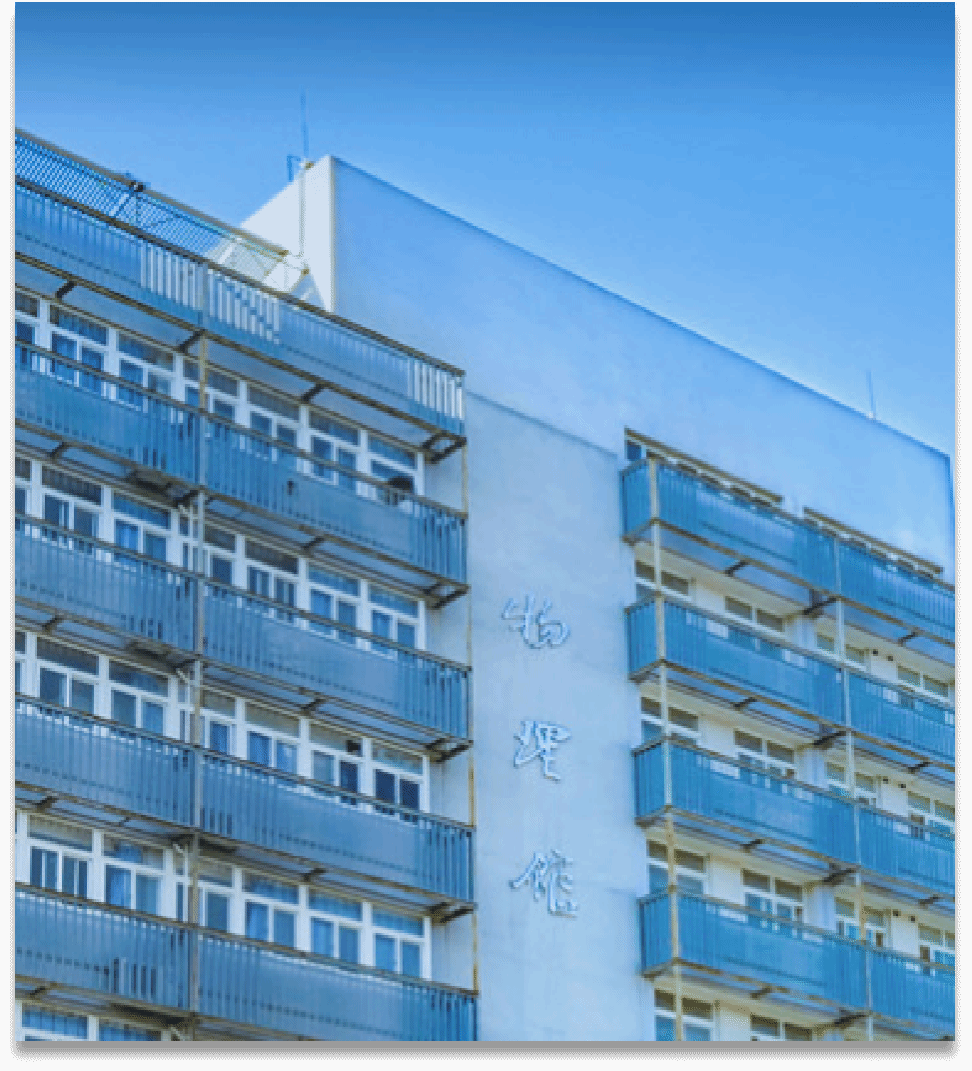
Physics School at Tongji University
Center for Frontier Interdisciplinary Research in Fundamental SciencesQS# 273 in the World- 4 Second-level Disciplines
- 5th National Discipline Evaluation:A-
- ESI Ranking: within 5‰
FacultyExplore More
The combined faculty exceeds four hundred full-time members, including over ten CAS and CAE academicians, more than one hundred national talent program awardees, and over twenty fellows of international societies such as the APS. Fudan's physics department counts 7 CAS academicians and 11 APS Fellows among its 120+ faculty. SJTU and TDLI host over 200 researchers, with international scholars from sixteen countries constituting nearly 40% of TDLI's community. Tongji employs 116 full-time teachers, 34% holding national high-level titles, alongside one European Academy of Sciences member. Approximately 80% of Fudan's and the majority of SJTU's faculty have overseas experience, with full-time international faculty from Italy, Japan, France, and Germany. This concentration of talent ensures intellectual depth across all major physics sub-fields.
-
120+
Faculty
-
7
Academicians
-
3
Foreign Faculties
-
-
190+
Faculty
-
4
Academicians
-
16
Foreign Faculties
-
-
140+
Faculty
-
4
Academicians
-
4
Foreign Faculties
-
Scientific Research
The three institutions command world-class research platforms. Fudan is anchored by the State Key Laboratory of Applied Surface Physics, a top-rated base for condensed matter and surface science. SJTU and TDLI operate the State Key Laboratory of Dark Matter Physics, the PandaX detector at the China Jinping Underground Laboratory, the JUST four-meter telescope in Qinghai, and the TDLI-led TRIDENT deep-sea neutrino telescope, while actively participating in ATLAS at CERN, Muon g-2 at Fermilab, JUNO, and IceCube. Tongji manages the Key Laboratory of Advanced Microstructured Materials under the Ministry of Education, the National Industrial Metrology and Testing Center for Integrated Circuit Micro-Nano Inspection Equipment, and six national or provincial-ministerial key laboratories.
Over the past five years, the three institutions have published over 500 papers in Nature, Science, PRL, and Nature-series journals, with total research funding exceeding 1.5 billion RMB. Recognitions include several National Natural Science Awards, New Cornerstone Investigator grants, Future Science Prizes, and the Edward Teller Award.



-
4
Key Laboratories
-
65
High Quality Papers in 2025
Including 1 Nature -
3
Research Institutes
-
4
National Natural
Science Awards
-
5
Key Laboratories
-
98
High Quality Papers in 2025
-
-
-
6
Scientific Platforms
-
-
-
International Collaboration
-
Fudan University
- Deeply committed to international collaboration—80% of the faculty have studied or worked overseas.
- Regularly host distinguished scholars from around the world for lectures and academic exchange, including Nobel laureates.
-
Shanghai Jiao Tong University
- Regularly host distinguished scholars from around the world for lectures and academic exchange, including Nobel laureates.
- 10+ international partners and collaboration projects at TDLI.
International engagement is woven into the fabric of all three institutions. Fudan maintains active partnerships with leading universities worldwide such as UC Berkeley, the University of Tubingen, and Lund University, regularly host distinguished scholars including Nobel laureates, and foster an inclusive, multicultural academic environment. TDLI collaborates with NORDITA, APC at Universite Paris Cite, Sorbonne University, Oxford, and Lomonosov Moscow State University, organizing over twenty international conferences and hosting around two hundred and twenty visiting scholars annually. Tongji cooperates with dozens of universities across the US, France, Italy, Germany, the UK, Japan, and Singapore, including a joint China-Europe Nanophononics Laboratory. The institutions participate in various flagship global projects, demonstrating deep integration into the international scientific community.
-
Tongji University
- Increasing 3 co-operative institutes in last 3 years, signed 8 foreign-related agreements.
- Conducting Dual-degree, Exchange, Visiting and research collaboration programs with famous institutes in France, Italy, Britain, Netherland, etc.
Talent Cultivation
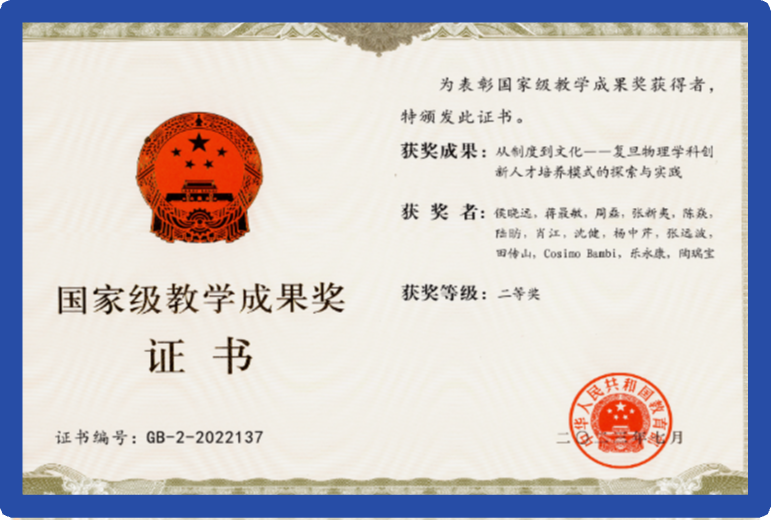
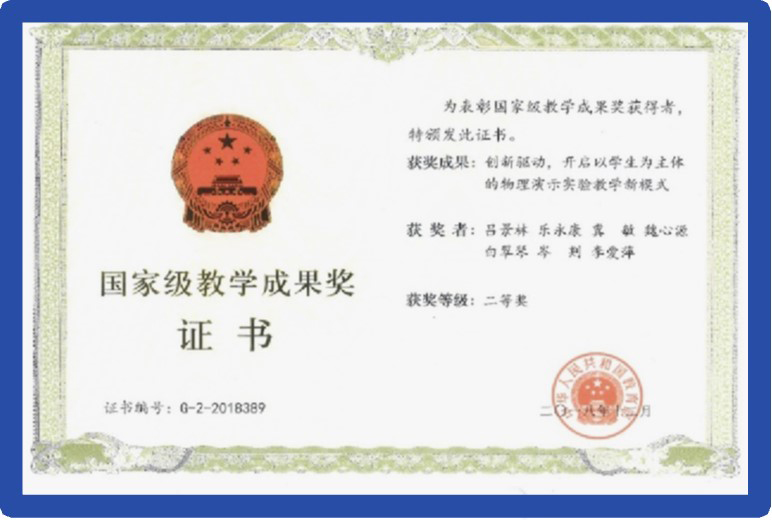
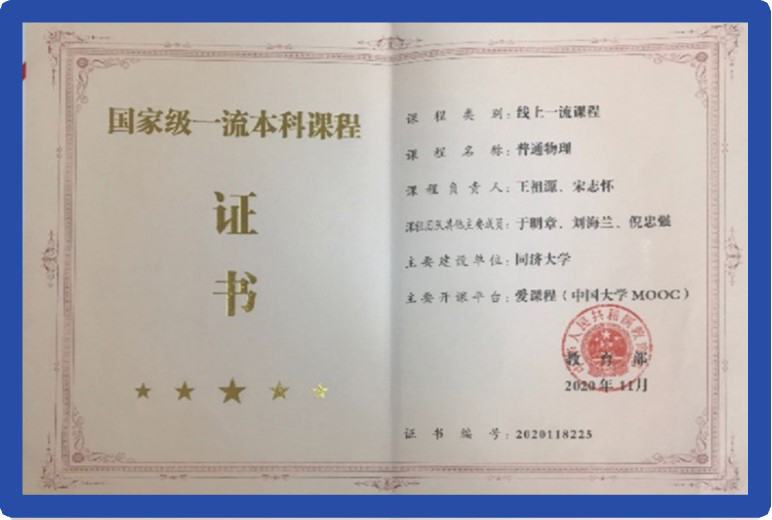
The three institutions have built a comprehensive talent cultivation system. Fudan's rigorous pipeline, benchmarked against global standards with a qualifying examination at its core, has produced generations of leaders, with 56% of PhD graduates pursuing academic careers worldwide and alumni including NAS members Zhixun Shen and Shou-Cheng Zhang. SJTU's direct-entry doctoral program combines structured coursework with progressive research independence; TDLI's five-year program mandates at least one international conference presentation and operates entirely in English. Tongji's curriculum has earned national teaching achievement awards and produced a Ministry of Education-recognized outstanding textbook, with its applied physics program selected for both the Strong Foundation Initiative and the Top-notch Students Program 2.0. Students benefit from international exchange programs, dual-degree programs, and access to fabrication cleanrooms and high-performance computing clusters. Graduates are recruited by top universities and high-tech enterprises across North America, Europe, and Asia.
In summary, the three universities offer highly complementary strengths in physics and astronomy, backed by world-class faculty, state-of-the-art research platforms, and extensive global collaboration networks. These existing foundations provide robust support for the JUSTCOOL program's feasibility. By joining forces, the three institutions will not only create an ideal platform for cultivating first-rate international talents but also leverage this initiative to further elevate the international standing of physics disciplines in China.
-
Fudan University

- 2 National Teaching Platforms
- 2nd prize of National Teaching Achievement Award:3
- National First-class Undergraduate Courses:3
-
Shanghai Jiao Tong University
- 2 National and provincial/ministerial platforms
- 2nd prize of National Teaching Achievement Award:2
- National First-class Undergraduate Courses:4
-
Tongji University
- Several national and provincial/ministerial platforms
- 2nd prize of National Teaching Achievement Award:1
- National First-class Undergraduate Courses:5